Questionsworth forty years
From ram semen kept alive without a fridge to the burnout of open-university staff, these are the questions he has worked on since 1988, and every paper that came out of them.
How do you keep farm animals fertile in a hot, seasonal climate, with little refrigeration and few artificial insemination services? That question runs from his 1990 paper in Theriogenology to his 2003 inaugural lecture, Reproduction: The Vehicle of Life.
What limits the productivity of the goats, sheep and cattle that smallholders in northern Nigeria actually keep? His most cited paper, on the milk composition of indigenous goats, comes from this line of work.
Small stock is how many Nigerian households start keeping animals.
The abattoir is a window into herd health.
What happens to animal products after the farm? He has studied how Nigerians buy, process and store meat and milk, including the shelf life of kilishi under a New Nigeria Foundation grant.
How many animals can a piece of land carry before it breaks? As principal investigator on a World Bank-assisted NARP project, he studied the balance between livestock, wildlife reserves and the people around them.
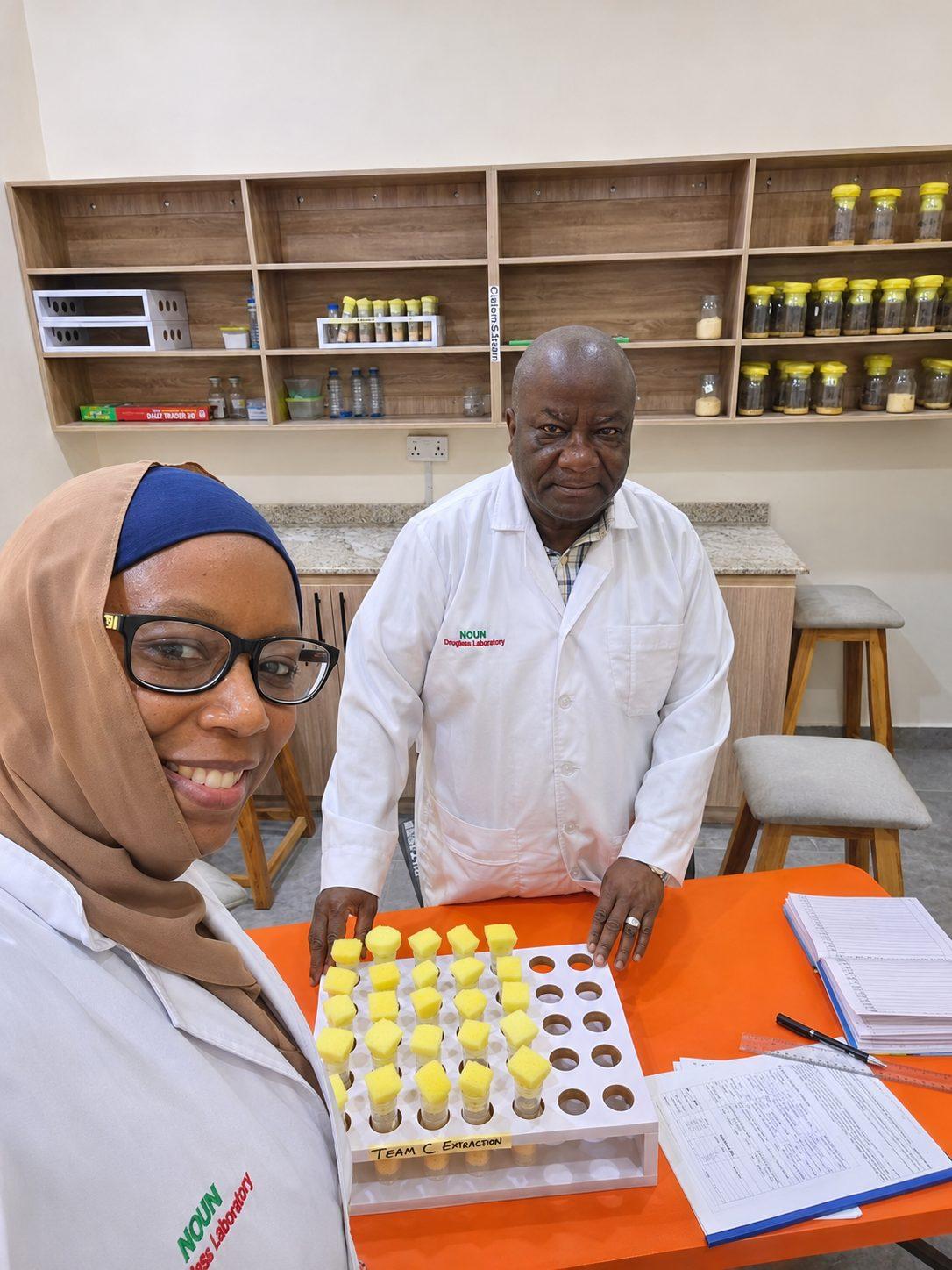
After two decades in a conventional university, he spent nearly twenty years at the National Open University of Nigeria.
Who checks that a university is fit to teach? He has spent the last decade doing exactly that: on NUC accreditation and resource-verification teams, as a certified accreditor, and in VICBHE training on quality assurance.